Buy swimproject.eu ?
We are moving the project
swimproject.eu .
Are you interested in purchasing the domain
swimproject.eu ?
domain@kv-gmbh.de · 0541-91531010
Buy swimproject.eu ?
Can planetary orbits intersect?
No, planetary orbits cannot intersect. In our solar system, each planet orbits the sun in its own distinct path, and these paths do not cross or intersect. This is due to the gravitational forces between the planets and the sun, which keep their orbits separate and stable. If planetary orbits were to intersect, it would lead to chaotic and unstable interactions between the planets, which is not observed in our solar system. **
Why are there elliptical orbits?
Elliptical orbits occur due to the gravitational forces between celestial bodies. When an object is under the influence of a central force, such as gravity, its path will often take the shape of an ellipse. This is because the force of gravity is stronger at shorter distances, causing the object to move faster when closer to the center of mass and slower when farther away. As a result, the object follows a curved path that is elliptical in shape. **


Similar search terms for Orbits
Top-Angebote
Products related to Orbits:
-
USA Free Shipping Shop Portable Electric Air Pump For Camping Air Mattresses And Pool Floats blackFeel ready for every adventure with a compact pump that makes inflating and deflating effortless. This Portable air pump is designed for campers, travelers, beachgoers, and families who want a fast, hasslefree setup for air beds, sleeping pads,...229,97 $*Shipping: 0,00 $Secure redirect to the provider
-
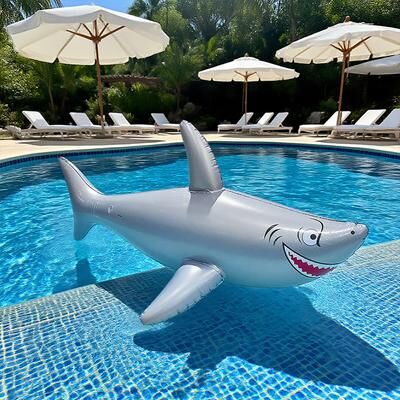
Smart Shopping Spot Shark Toy Pool Party Decoration Beach Float Shark Toy Pool Party Decoration Beach FloatMake a splash at your next celebration with this eyecatching inflatable 1pc shark toy that instantly transforms any pool or beach setup into an unforgettable scene. Designed for party lovers, kids, and oceanthemed events, this playful yet realistic...34,97 $*Shipping: 0,00 $Secure redirect to the provider
-
Multisell Products Hub Luxury Beach Outings Belted Swimwear Cape Sea Boho Coverup Long bird one SizeElegant and Comfortable Beach Coverup: Introducing the Sea Boho Coverup Long Luxury Beach outing cape, designed to make you stand out on your next beach vacation. This stunning coverup combines comfort with style, offering a versatile option for...79,97 $*Shipping: 0,00 $Secure redirect to the provider



-
On which orbits do planets move?
Planets move on elliptical orbits around the Sun. These orbits are not perfect circles but slightly elongated, with the Sun located at one of the foci of the ellipse. The gravitational pull of the Sun keeps the planets in their orbits, causing them to move in a predictable path around the Sun. **
-
'Between the orbits of the planets.'
The asteroid belt is located between the orbits of Mars and Jupiter. It is a region in our solar system where millions of small rocky bodies, called asteroids, orbit the sun. The asteroid belt is thought to be the remnants of a failed planet formation, as the gravitational pull of Jupiter prevented the material in this region from coalescing into a single planet. The largest asteroid in the belt is Ceres, which is also classified as a dwarf planet. **
-
Why are the planet orbits elliptical?
The planet orbits are elliptical because of the gravitational force exerted by the sun. According to Kepler's laws of planetary motion, planets move in elliptical orbits with the sun at one of the foci. This means that the gravitational force between the sun and the planet causes the planet to move in a curved path, resulting in an elliptical orbit. The shape of the orbit is determined by the balance between the planet's velocity and the gravitational force pulling it towards the sun. **
-
In which direction do the planetary orbits run?
The planetary orbits run counterclockwise around the Sun when viewed from above the Earth's North Pole. This means that the planets move in the same direction as the Sun's rotation. This counterclockwise motion is known as prograde motion. The planets all orbit the Sun in roughly the same plane, known as the ecliptic plane. **


Why do the planets move in elliptical orbits?
The planets move in elliptical orbits due to the gravitational force exerted by the Sun. According to Kepler's laws of planetary motion, the shape of the orbit is determined by the balance between the gravitational force pulling the planet towards the Sun and the planet's inertia trying to carry it away. This results in an elliptical path rather than a perfect circle. The eccentricity of the orbit determines how elongated or circular it is, with a value of 0 representing a perfect circle and higher values representing more elongated ellipses. **
Who discovered the elliptical orbits of the sun?
The discovery of the elliptical orbits of the sun is credited to the German astronomer Johannes Kepler. In the early 17th century, Kepler formulated his three laws of planetary motion, which described the elliptical paths that planets follow around the sun. These laws revolutionized our understanding of the solar system and laid the foundation for Isaac Newton's law of universal gravitation. **
Top-Angebote
Products related to Orbits:
-
Shop Station Kids Underwater Treasure Hunt Pool Diving Toys Set With Fish, Dolphin & Diving Gems Kids Underwater Treasure Hunt Pool Diving Toys Set With Fish, Dolphin & Diving GemsExperience exciting underwater adventures with this colorful pool diving toys set designed to make every swim more fun. Featuring fish, dolphin, and sparkling diving gems, it's perfect for children who love games, challenges, and imaginative play in...34,97 $*Shipping: 0,00 $Secure redirect to the provider
-
Shop Station Adjustable Water Aerobics Cuffs Aquatic Fitness Cuffs & Swim Ankle Floats For Pool Exercise Adjustable Water Aerobics Cuffs Aquatic Fitness Cuffs & Swim Ankle Floats For Pool ExerciseMake every pool workout more effective while staying comfortable and supported. These water aerobics cuffs are designed for swimmers, fitness enthusiasts, and rehabilitation users who want to add gentle resistance and buoyancy to their aquatic...44,97 $*Shipping: 0,00 $Secure redirect to the provider
-
USA Free Shipping Shop Portable Electric Air Pump For Camping Air Mattresses And Pool Floats blackFeel ready for every adventure with a compact pump that makes inflating and deflating effortless. This Portable air pump is designed for campers, travelers, beachgoers, and families who want a fast, hasslefree setup for air beds, sleeping pads,...229,97 $*Shipping: 0,00 $Secure redirect to the provider
-
Smart Shopping Spot Shark Toy Pool Party Decoration Beach Float Shark Toy Pool Party Decoration Beach FloatMake a splash at your next celebration with this eyecatching inflatable 1pc shark toy that instantly transforms any pool or beach setup into an unforgettable scene. Designed for party lovers, kids, and oceanthemed events, this playful yet realistic...34,97 $*Shipping: 0,00 $Secure redirect to the provider
-
Can planetary orbits intersect?
No, planetary orbits cannot intersect. In our solar system, each planet orbits the sun in its own distinct path, and these paths do not cross or intersect. This is due to the gravitational forces between the planets and the sun, which keep their orbits separate and stable. If planetary orbits were to intersect, it would lead to chaotic and unstable interactions between the planets, which is not observed in our solar system. **
-
Why are there elliptical orbits?
Elliptical orbits occur due to the gravitational forces between celestial bodies. When an object is under the influence of a central force, such as gravity, its path will often take the shape of an ellipse. This is because the force of gravity is stronger at shorter distances, causing the object to move faster when closer to the center of mass and slower when farther away. As a result, the object follows a curved path that is elliptical in shape. **
-
On which orbits do planets move?
Planets move on elliptical orbits around the Sun. These orbits are not perfect circles but slightly elongated, with the Sun located at one of the foci of the ellipse. The gravitational pull of the Sun keeps the planets in their orbits, causing them to move in a predictable path around the Sun. **
-
'Between the orbits of the planets.'
The asteroid belt is located between the orbits of Mars and Jupiter. It is a region in our solar system where millions of small rocky bodies, called asteroids, orbit the sun. The asteroid belt is thought to be the remnants of a failed planet formation, as the gravitational pull of Jupiter prevented the material in this region from coalescing into a single planet. The largest asteroid in the belt is Ceres, which is also classified as a dwarf planet. **
Similar search terms for Orbits
-
Multisell Products Hub Luxury Beach Outings Belted Swimwear Cape Sea Boho Coverup Long bird one SizeElegant and Comfortable Beach Coverup: Introducing the Sea Boho Coverup Long Luxury Beach outing cape, designed to make you stand out on your next beach vacation. This stunning coverup combines comfort with style, offering a versatile option for...79,97 $*Shipping: 0,00 $Secure redirect to the provider
-
JML Camouflage beach towel,Quick Dry, Lightweight & Compact beach towel for Pool, Yoga and Camping"Material: Microfiber Size:30"" x 60"" Features: Prime Quality Material -- The beach towel is made of microfiber. Soft, lightweight, breathable, highly water absorbent, non-pilling, lint-free and not easy to fade. Perfect Decoration -- 30 x 60 Inch."28,99 $*Shipping: 0,00 $Secure redirect to the provider
-
Why are the planet orbits elliptical?
The planet orbits are elliptical because of the gravitational force exerted by the sun. According to Kepler's laws of planetary motion, planets move in elliptical orbits with the sun at one of the foci. This means that the gravitational force between the sun and the planet causes the planet to move in a curved path, resulting in an elliptical orbit. The shape of the orbit is determined by the balance between the planet's velocity and the gravitational force pulling it towards the sun. **
-
In which direction do the planetary orbits run?
The planetary orbits run counterclockwise around the Sun when viewed from above the Earth's North Pole. This means that the planets move in the same direction as the Sun's rotation. This counterclockwise motion is known as prograde motion. The planets all orbit the Sun in roughly the same plane, known as the ecliptic plane. **
-
Why do the planets move in elliptical orbits?
The planets move in elliptical orbits due to the gravitational force exerted by the Sun. According to Kepler's laws of planetary motion, the shape of the orbit is determined by the balance between the gravitational force pulling the planet towards the Sun and the planet's inertia trying to carry it away. This results in an elliptical path rather than a perfect circle. The eccentricity of the orbit determines how elongated or circular it is, with a value of 0 representing a perfect circle and higher values representing more elongated ellipses. **
-
Who discovered the elliptical orbits of the sun?
The discovery of the elliptical orbits of the sun is credited to the German astronomer Johannes Kepler. In the early 17th century, Kepler formulated his three laws of planetary motion, which described the elliptical paths that planets follow around the sun. These laws revolutionized our understanding of the solar system and laid the foundation for Isaac Newton's law of universal gravitation. **
* All prices are inclusive of VAT and, if applicable, plus shipping costs. The offer information is based on the details provided by the respective shop and is updated through automated processes. Real-time updates do not occur, so deviations can occur in individual cases. ** Note: Parts of this content were created by AI.